


A Shift in How Allergies Are Prevented
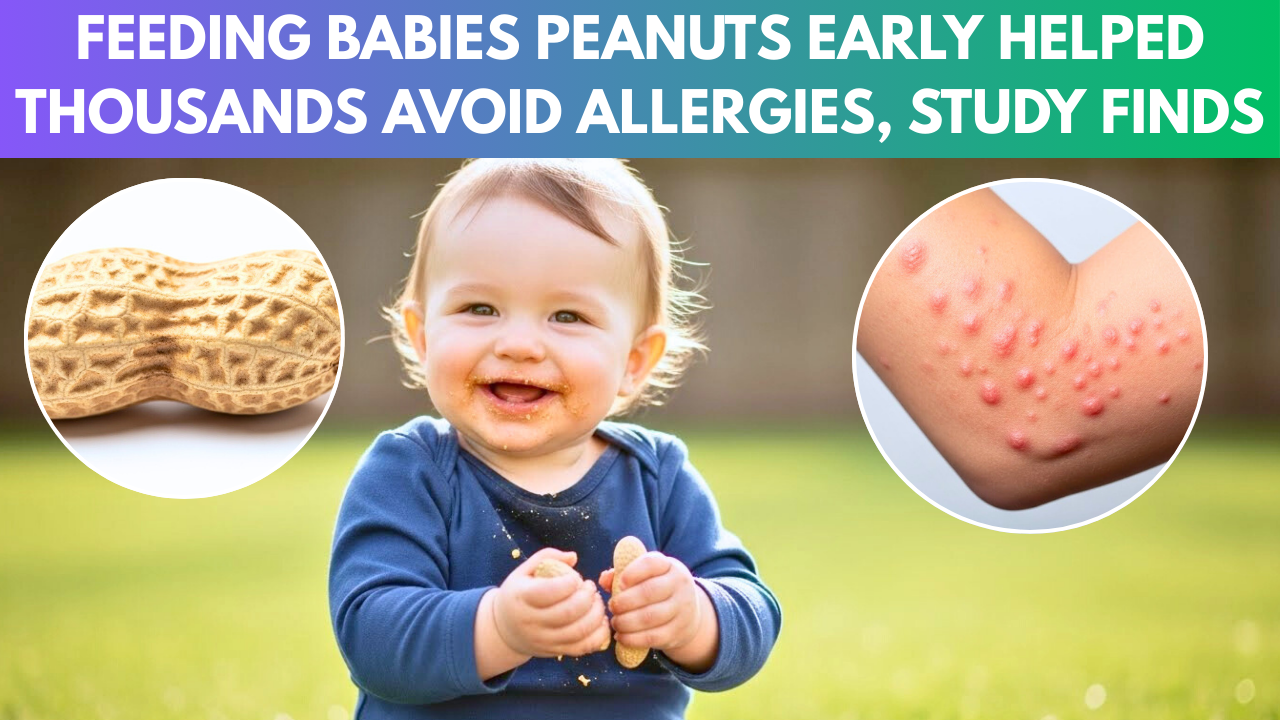
For years, parents were advised to keep peanuts away from babies to prevent allergies. But new research suggests that doing the opposite may actually help. A large study has found that introducing peanuts early and regularly reduced the risk of peanut allergies in tens of thousands of children.
The findings are part of a growing shift in how doctors and scientists understand food allergies. Instead of avoidance, early exposure is now being studied as a possible protective step.

What the Study Looked At
The study followed more than 60,000 children over several years. Researchers tracked when peanuts were introduced into infants’ diets and compared allergy outcomes as the children grew older.
Children who were given peanut-containing foods early in life showed significantly lower rates of peanut allergy compared to those who avoided peanuts during infancy.
Why Timing Matters
Scientists believe the immune system is more adaptable during early childhood. Introducing small amounts of certain foods during this window may help the body learn that these foods are harmless.
Rather than triggering an allergic response, early exposure may help the immune system build tolerance over time.

A Change from Past Advice
In the past, many health guidelines encouraged parents to delay giving peanuts to babies. That advice was based on limited evidence and caution.
Over the last decade, multiple studies have challenged that thinking. This latest research adds to the growing body of evidence supporting early introduction under proper guidance.
What Experts Are Saying
Health experts involved in the research stress that this approach is about prevention, not treatment. It does not apply to children who already show signs of severe food allergies.
They also emphasize that parents should follow local health guidance and consult professionals when making feeding decisions.
Why the Results Matter
Food allergies can affect quality of life and create constant anxiety for families. Preventing allergies before they develop could reduce long-term health risks and emotional stress.
The study suggests that small changes early in life may have lasting benefits.
A Growing Area of Research
Researchers continue to study how early exposure to different foods affects immune development. Peanuts are one of the most studied examples, but similar research is ongoing for other common allergens.
The goal is to create clearer, safer guidelines for parents around the world.
Looking Ahead
While the results are promising, scientists say more long-term research is still needed. Diet, genetics, and environment all play a role in allergy development.
For now, the study highlights how scientific understanding evolves, sometimes challenging long-held beliefs.
( IMAGE CREATED WITH AI )





Leave a comment