


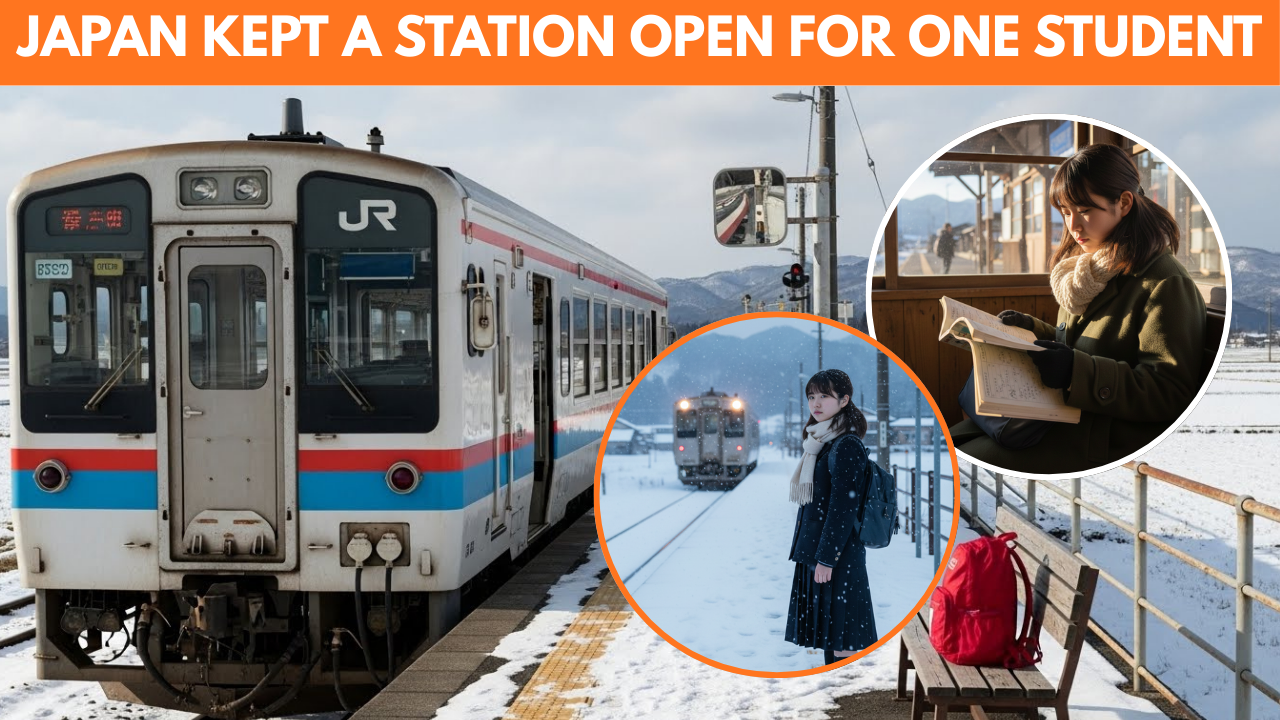
In a quiet part of northern Japan, a nearly forgotten train station was supposed to shut down forever. It had no shops, no staff, and barely any passenger’s. For the railway company, keeping it open no longer made financial sense.
Then they noticed something that changed everything.
One student still depended on that station every single day to get to school.
What happened next became a story that captured global attention and showed the world a different side of public service.
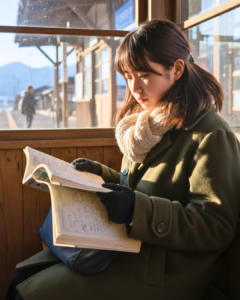
A Station with No Passengers
The station was Kyu-Shirataki Station, located in Hokkaido, Japan’s northernmost island. Like many rural areas in Japan, Hokkaido has faced population decline for years. Young people move to cities, villages grow quieter, and public services slowly disappear.
By the early 2010s, Kyu-Shirataki Station was almost unused. Trains stopped there only a few times a day, and most days, no one got on or off.
From a business point of view, closure was inevitable.
Japanese railway companies regularly shut down underused stations to cut costs, especially in remote regions. Kyu-Shirataki was placed on the closure list.
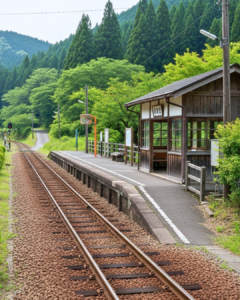
The Discovery That Changed the Plan
Before finalizing the shutdown, railway officials reviewed usage data more closely.
That is when they noticed something unusual.
Although passenger numbers were close to zero, one student used the station consistently. Every morning, she boarded the train to go to school. Every afternoon, she returned the same way.
For her, this station was not a convenience. It was her only way to get an education.
Without it, she would have had to travel long distances on foot or relocate entirely, something not every family can easily afford.
An Unusual Decision
Instead of closing the station as planned, the railway company made a rare and deeply human decision.
They chose to keep the station open solely for this one student.
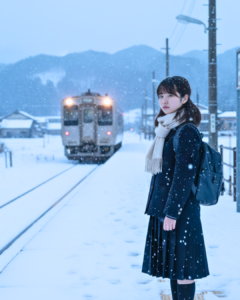
Even more remarkably, they adjusted the train schedule to match her school hours. Trains stopped there when she needed to travel and skipped the station at other times.
The plan was simple but powerful:
-
The station would remain open
-
Service would continue
-
And once the student graduated, the station would finally close
No advertising campaign. No press release. Just a quiet decision made behind the scenes.
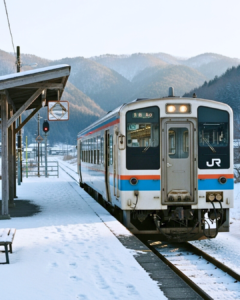
Years of Quiet Service
For several years, this arrangement continued.
The station remained unmanned, basic, and nearly empty. In winter, snow covered the platform. In summer, grass grew along the tracks. Most of the time, the student stood alone, waiting for the train.
Railway staff did not treat it as a publicity stunt. They treated it as a responsibility.
In a country known for efficiency and punctuality, this choice stood out. It showed that systems could still bend for people when it truly mattered.
How the World Found Out
The story remained largely unknown until local media picked it up and shared it more widely. Once it reached international news outlets and social media, it spread quickly.
People around the world reacted with surprise and admiration.
Comments flooded in:
-
“Only in Japan.”
-
“This is what public service should look like.”
-
“Education first, profit later.”
For many readers, the story challenged assumptions about large organizations and bureaucracy. It showed that compassion and logic do not have to be opposites.
Graduation and Closure
When the student finally graduated, the railway company followed through with the original plan.
Kyu-Shirataki Station officially closed in March 2016.
There was no ceremony. No speeches. Just a quiet end to a station that had fulfilled its final purpose.
By then, its legacy was already secure.
Why This Story Matters
At its core, this is not just a story about a train station. It is about priorities.
In many parts of the world, access to education depends on infrastructure that people often take for granted. When that infrastructure disappears, opportunities disappear with it.
This case showed that:
-
Small decisions can have life-changing impact
-
Public systems exist to serve people, not just balance sheets
-
One person’s future can be worth more than short-term savings
It also highlighted a cultural value deeply rooted in Japan: responsibility to the community, even when the community is just one person.
( IMAGE CREATED WITH AI )






Leave a comment